kevinjohncurnin

  • Images of MAGA, then and now

    From its birth, not in freedom but grievance, MAGA has always looked back to a past that never existed. The seed was planted in a longed-for Garden of Eden for white Christians, well-coifed men like Mike Johnson, self-made like Brett Kavanaugh, Barbie-looking women who couldn’t vote but could submit and child-bear, isolationists, and of course a very few fabulously wealthy chosen ones. And the garden was always theirs.

    In this land of make believe, there are no Indigenous peoples, no slavery — at least no bad slavery. Not the kind of slavery where someone would be mercilessly whipped for trying to be free. And this is why MAGA will fail. Because that history already happened and the struggle to erase it is not only futile, but embarrassing, it betrays the core weakness of the movement. There is no truth to it. No there there, no matter how many times Ofdonald Leavitt snarls at the press pool that, goddammit, the president said so!

    The history of the United States is dark and the current attempt to whitewash it reeks of desperation and fear. Desperate to suppress votes. Fearful of the inevitable. The United States, for all its grave failings, is a progressive nation, soon to be a minority white nation.
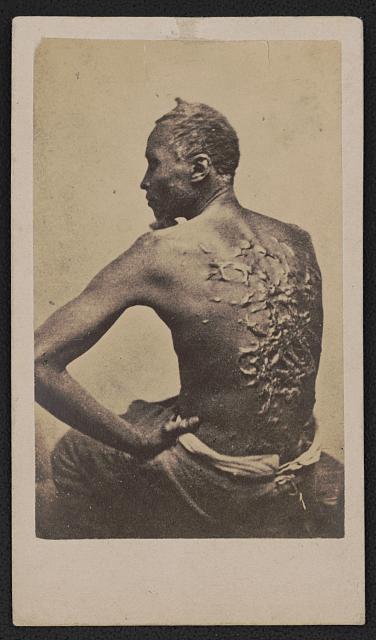
    The president’s directive to the National Park Service recently to remove the photograph known by the chilling title “The Scourged Back,” was another low point for the administration. This happened. His name was Gordon. It is as hard to imagine his courage as it is to understand the hatred at the other end of the whip. Our present scourge is called MAGA; while it will fail, more harm will come. Let’s honor the man in this image, whose blood ran red like yours and mine, by remembering that he risked everything for the same freedom we want for ourselves and our children.

    How did the image come to be? It was made when Gordon, after surviving his scourge, escaped his tormenters and joined the Union Army. There is something graceful in his pose, one hand on his hip, his head turned almost elegantly to the side as if to look back without shame or fear at the photographers. I am here. I am a man.

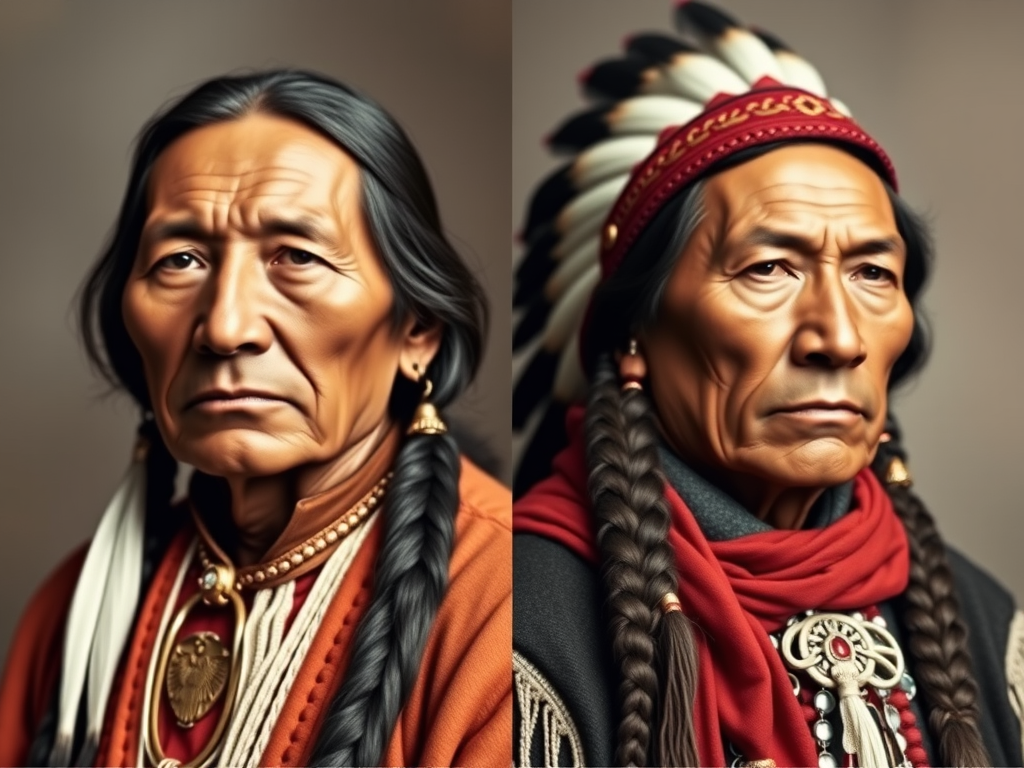
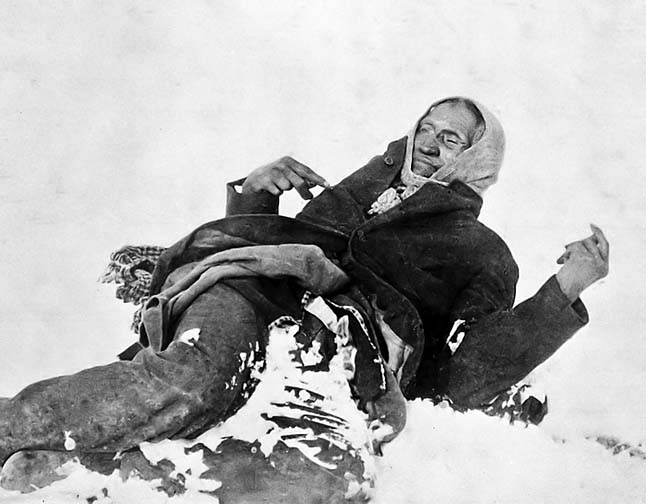
    That indelible image was made in 1863. Not 27 years later, another searing wartime photo was taken, this one in the Midwest, near Wounded Knee Creek. After the massacre there — carried out with a lethality that Pete Hegseth longs for by the same calvary unit once led by George Custer — a bitter three-day blizzard ensued. Children, women and men were left where they lay. Their corpses froze. The blizzard lifted on New Year’s Day, 1891.

    Among them was Lakota Chief Spotted Elk. He was by then an elderly man and not in good health. He was looking forward to seeing his friend Red Cloud at the Pine Ridge Reservation. Like so many of his people murdered that day, he was unarmed. The image is an unnerving reminder of how much was lost in the genocidal U.S. campaign to clear the country of its original peoples. In an attempt to erase a culture, we — white European American protected by military force (sound familiar?) — permanently stained our own.
    Landscape

    Because of the blizzard, the moment of the massacre is literally frozen in time. It is as we are on the scene. Spotted Elk’s arms are raised, his head is lifted. Like he had slipped and fallen in the snow and is about to arise and rejoin his people.  

    Both images not only recorded history but helped to shape it. The photograph of Gordon fueled the abolitionist movement. The photograph of Spotted Elk was greeted with revulsion by Eastern progressives who insisted on more transparency and fairness in Washington’s handling of the “Indian problem.”

    One can’t help but think of Emmett Till. The year is 1955. A young boy is brutalized and lynched by a white mob. The savage beating left him badly disfigured. Yet his mother, Mamie Till-Mobley, insists on an open coffin. “Let the world see,” she said. “Let the people see.” Again, history is recorded and shaped. Mamie’s courage and Emmett’s senseless sacrifice helped propel the Civil Rights Movement.

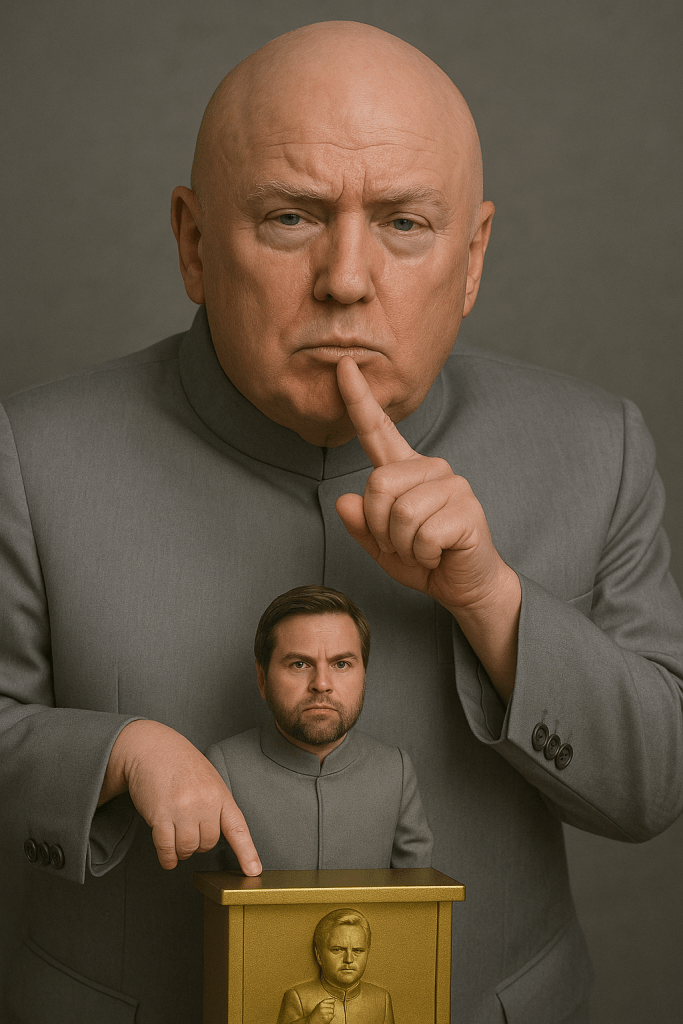
    What are the images we will look back on as capturing the dark days of MAGA? It will not be the idiotic AI trolling manufactured in the White House itself. It will not be fake eyelashes and red ties and hair gel. Some of the lasting images certainly will be of ICE. A shadow army operating outside the law, plauging our communities. Who are these masked Proud Boys body slamming women, gang tackling men face first in the street, smashing car windows, handcuffing entire families in the middle of the night, breaking bones, yanking parents from children?

    You’ve seen them. These images of MAGA will be erased never.
  • Of Satellites & Dust

    This post is about our next dust bowl, brought to you by way of satellites orbiting 440 miles above the earth.

    Last week, Trumpandlandia announced that it’s killing off the only two federally funded satellites doing climate research. The data they collect is critical. It’s used by scientists studying how to forestall the collapse of a livable planet and farmers trying to feed us so we don’t starve before we’re buried in lava. The satellites are called Orbiting Carbon Observatories, a far too plain and practical name that gives them away as scientific and therefore SAD! (They might’ve lasted longer behind a name like “Big Beautiful Birdies.”)

    Since climate change is a global phenomenon, Earth-circling satellites are needed to understanding what we’re facing. And because for now we still have the best technology and scientists on Earth, these satellites also measure photosynthesis and therefore plant growth, not only crops, but rangeland and forests, as well as drought. Drought predicts crop failure which predicts mass migration which predicts socio-political stability, which … ah, forget it: Kill the Satellites. NASA calls the protocol for terminating perfectly good satellites paid for by taxpayers “Plan F.” You can guess what the “F” stands for. (It cost as much as $1B to put the satellites in space – but only $15M a year to maintain them.) Here’s a kicker, at the same time it’s preparing to destroy satellites at their peak of efficiency, NASA is open for business from private satellite companies. Musk to the rescue, again on the coattails of public funding.

    FUN FACT: Each year, we put 36 billion tons of carbon dioxide into the atmosphere, but only half of it stays there. Where does the rest go? These satellites were helping us figure it out.

    Like everything else out of Trumplandia, when you peel back the layers, it gets weirder and weirder. The planet is up for grabs. Oil and gas drilling from the Artic Ocean to the Carolina Coasts, and millions of acres of public lands in between for sale. If it doesn’t feel like it yet, it will: this is your backyard. Not to worry, though, the EPA has ERASED the crucial, if decades late, 2009 “Endangerment Finding,” which admitted that human-made heat-trapping gases like carbon dioxide are a threat to humanity (and everything that lives). In other words, not our fault, so we’ll keep on extracting.  Drying up fastest? That’s a tie between approval of solar and wind projects and enforcement against polluting coal, oil and gas companies.

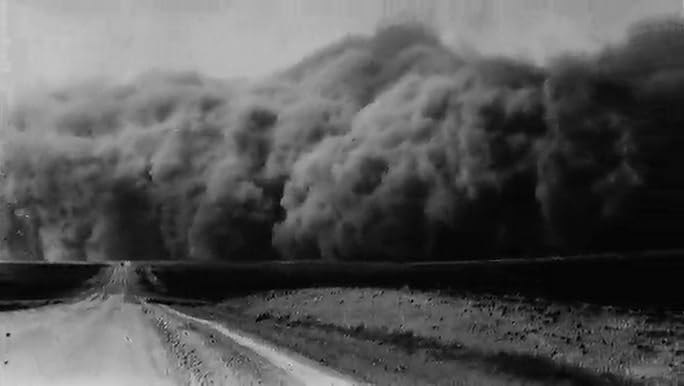
    The American Dustbowl of the 1930s was one of the worst environmental disasters in our history. It enveloped much of the Heartland. It lasted a decade. Bad farming policy is to blame. We over-did it; more and more cropland, less and less prairie. Then drought. The cost is impossible to calculate. Millions of acres turned to dust. Farms, livelihoods, lives lost. Despair.

    But, as we always do, we put that behind us, thanks in large part to technology, and restocked America’s Breadbasket. About one-third of our grains, produce and meat come from there. Since the plains are semi-arid, almost all of this production depends on irrigation. There’s basically one source. It’s called the Ogallala Aquifer, and it stretches from South Dakota to Texas. We’re killing it, too. We are both depleting and polluting the Ogallala. In places, it’s already gone. This groundwater is millions of years old and irreplaceable. The end of the Ogallala is the end of the American Heartland.

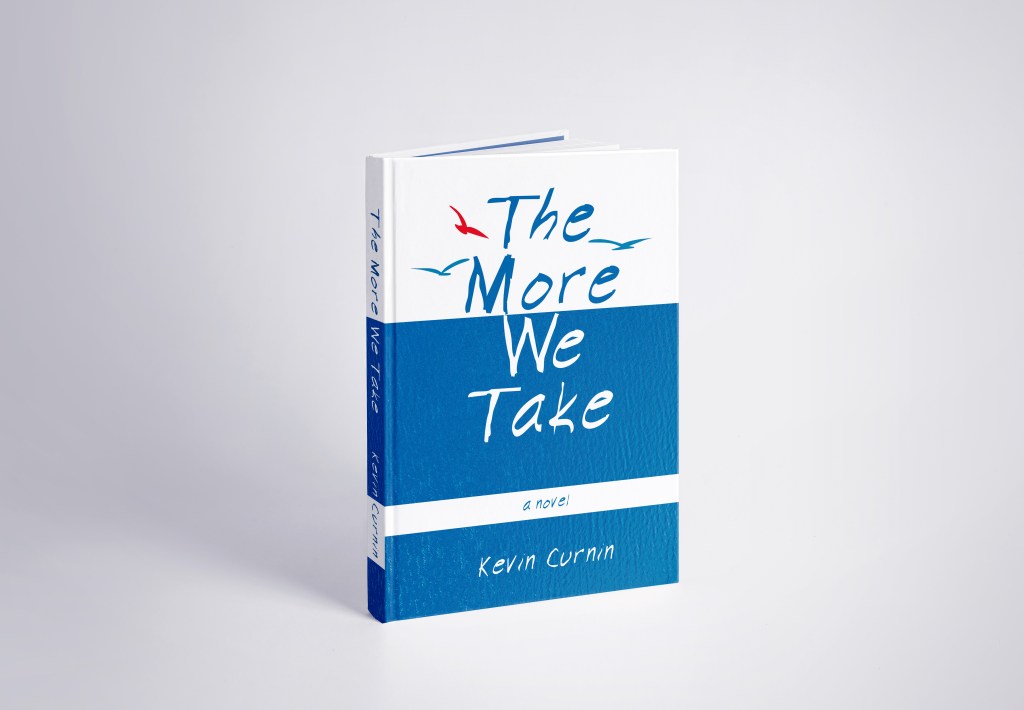
    The More We Take is a sometimes harsh, sometimes fantastical, yet hopeful story about how, first, we stole the prairie from the Plains tribes, murdering and jailing and separating Indigenous families, and second, we abused the stolen land because that meant more money.

    All stories are true. The More We Take gives us a fighting chance at avoiding disaster. The chance is us. The fighters here are ordinary Nebraskans (a surveyor, a nurse, a manager) who get extraordinary help (Sitting Bull, Red Cloud, Crazy Horse) to take a stand for a better tomorrow. This is a scrappy, irreverent group of underdogs willing to organize and protest and take on Big Ag, and their little orbit attracts a colorful group — a rodeo star, a hippie farmer, a 10-year-old clairvoyant — who aren’t afraid to get caught trying.

  • A New Birth in … What?

    On this Fourth of July, a day to celebrate liberty, we’re all at risk of losing ours. The unlawful ambush and incarceration of undocumented workers diminishes your liberty too. Scapegoating the LGBTQ+ community diminishes all of us. Stripping healthcare from the poor to further fatten the rich denigrates the entire experiment we call the United States. If you’re not feeling it, pinch yourself, hard.

    Lies are winning. History is literally being rewritten, erasing people of color, tidying up all signs of the struggle. Democracy is giving way to oligarchy, for sure. The way out of it is to go through it and the way to go through it is to bring everybody in. We rise or fall on inclusion. E Pluribus Unum is now a warning. Let’s not let our greatest strength be our greatest weakness.

    Black history is American history. Indigenous history is American history. We cannot understand ourselves without understanding those who came before and those with whom we share the same spaces and more often than not the same dreams.

    The very flatness of the High Plains makes it a compelling place to see how history has been written, revised, and white-washed over the centuries. Today we risk a second desecration of the land we stole from Indigenous peoples, the first desecration being the attempted extermination of the tribes that called North America home 10,000 years before Europe showed up. The land was stolen, but the people and their culture would not be extinguished.

    In The More We Take, three unlikely heroes, wrestling with painful personal histories of their own, find a connection to the history of the prairie and form the nucleus of a ragtag band of resistance to the corporate greed that is draining the Ogallala Aquifer of its ancient, sacred, and irreplaceable freshwater.  This matters because all of nature matters and because the Ogallala almost single-handedly supports life as we know it in the Midwest, including one-third of the meat and produce this country consumes.  And yet history tells us that we will go right ahead and pollute and deplete it until it is gone, forever.  

    And then even the Oligarchs will suffer. There’s no replacement for fresh water.

    Are we even capable of doing better? Must we always war upon one another and upon the planet? Wisdom-keepers of yesterday show us a better way is possible and that is why they reappear on the Plains in The More We Take to fight and struggle alongside Clete and Irene and Kathy and their band of misfits: a brain-injured rodeo star, an old hippie marijuana farmer from New Jersey, a 10-year-old savant. 

    We’re all misfits in this story. E Pluribus Unum. Don’t sit it out.

    READ . THINK . ACT

    Kevin

  • Father’s Day & The Red Road

    Father’s Day & The Red Road

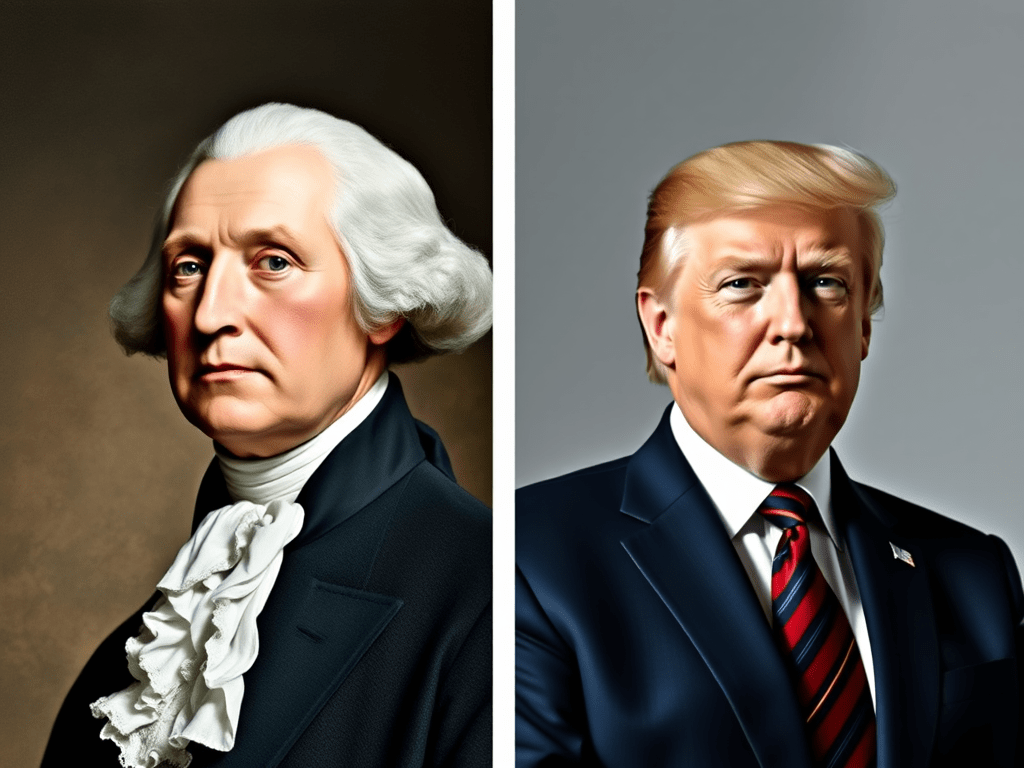
    George Washington is sometimes called the Father of the Country. By presidential descent, what does that make Trump, who has the slave-holder’s racism without any of Washington’s courage (Donald dodged the draft) or restraint (George refused a third term). Trump is the embodiment of the worst of us, untouched by what Lincoln called our better angels. Where does that leave American men on Father’s Day?

    Near the end of his life, after a heart-breaking search for a refuge where his hunted and starving Lakota people could live free, Sitting Bull knew he had to surrender to save them. There is a scene THE MORE WE TAKE where historian Josephine Waggoner describes those final moments of freedom before Sitting Bull is taken into custody and put on a steamship that would take him, effectively, to prison. Would he put down his rifle or, his people seemingly safe, would he choose to die in a final act of resistance rather than be captive? At the riverside, he sees his daughter. She’s dressed in red, representing endurance and wisdom in the face of adversity. She opens her arms wide as if to embrace her father. Stay with us. The Chief of Chiefs hears her silent prayer and surrenders himself. He’s taken by U.S. cavalry and confined to Standing Rock Reservation where, years later, he would be killed by police.

    There are many Lakota fathers I was not taught about in school. Crazy Horse, untouchable in battle, was murdered in his mid-30’s while jailed at Fort Robinson. Spotted Elk, along with 200 or more of his people, many of whom were unarmed women and children, was gunned down by the 7th Cavalry at the Wounded Knee massacre just two weeks after Sitting Bull’s death.

    On this Father’s Day, with the sins of our “forefathers” having taken new root, I’m thinking of how we can learn from the wisdom-keepers of the past, resist the tyranny of today, and for the sake of our children have courage enough to fight for a better tomorrow.

    The Lakota call it Chanku Duta, or the Red Road. Walking the Red Road means living a purposeful, virtuous, spiritual life grounded in patience, inclusion, hard work, generosity, honesty, and a respect for the interconnection of all living things past and present.

    May the Red Road rise to meet you.

    Kevin

  • The More We Take

    The More We Take

    Hi (again) Friends,

    So I wrote this book …

    The More We Take is a novel that asks if we can love one another enough to love the planet and maybe save it and ourselves. Or are we stuck on a different track: taking as much as we can for as long as we can … until it’s all gone?

    You can find The More We Take on Amazon or Barnes & Noble, but it’s more fun to go to the website, because the book looked so lonely there by itself that I added other stuff to keep it company: photos, poems, articles.  And, there’s a fuller description of The More We Take there.

    Once a month, I’ll send a brief email, shorter than this one, about a new post about something crazy going on around us every day — part of the impetus to write The More We Take in the first place.  

    We all have the right to question, dissent, push back. Use it or lose it.

    img_7138-1

    And speaking of pushing back, you can opt out of the newsletters. Or, you can share it with friends.

    I hope you stick around!

    Cheers,

    Kevin

    http://www.kevincurnin.com

  • Not Jordan

    I wear socks marked L and R
    They are not marketed
    As teaching tools
    For first time sock-wearers.

    They are marketed
    To guys for whom socks
    Not marked L and R
    Are not good enough.

    I wear them under
    Sneakers of many colors
    And advanced technology
    To protect me from mediocrity.

    So when I levitate (sort of)
    And shoot the rock
    It’s not the shoes
    It’s not the socks.

    And when the ball
    Clangs off the rim
    They don’t blame my gear
    They say “It’s him.”

  • In between, we choose

    We’re taught win or lose,
    but
    Nothing is above grace,
    and
    Nothing is below,
    So
    In between,
    we choose.

  • Harrow & Tarry

    Life is grand —
    never goes as planned!

    But of our plans what do we know —
    this much we reap / this much we sow?

    No, we harrow row by row;
    We tarry inch by inch.
    Sometimes a tablespoon;
    Sometimes just a pinch.

    The cards you’re dealt;
    Become your hand.
    Life is better
    When it’s not all planned.

  • Missalettes

    I took them
    Home to read
    By myself

    And left them there
    For years

    Then one day
    I brought them back

    In an empty church
    Left them on an empty pew.

  • Gyroscope of Crows

    Circles move within circles
    Swoop swirl dive & rise
    Over a faded green muddle field
    Next to last
    Month of the year
    Compressed afternoon cold & bright
    White sun crested and already dipping
    Follows its clipped arc

    Blackness so deep it shines
    How many are there?
    Four six five?
    Precise as surgeons
    Sharp edged carving space
    Among themselves as if they sky is theirs

    Cut to pieces the air falls
    In shadows to the ground
    And refills itself
    Unhinged, leaves fall
    Trees bare drained and
    Shrunk into themselves

    The Bay lifts its shoulders
    Bristles shivers once & sparkles
    As much as November can
    Turning over & into itself
    Sparkles roll off and away
    To edges where
    First ice will bloom

    Only the crows are undaunted
    Energized enthralling defiant
    For a moment I discern their dance
    Their gyration stops for a moment …

    And I see in that moment or through it
    Invisible strings
    Vibrating crow to crow
    And bursting hiding in plain sight
    Lining leaves trees breeze waves

    For a moment …
    As the year winds down
    Just when it should
    And just how it should
    To its last day

    And it’s not just me watching
    Surf turf oak ash cedar loam ledge
    The brown and the green and the silver
    Needle stem cone ripple root foam mud
    Like the stage and the stagehands
    The players and the play
    Watching the crows dance

    … And they start again
    Before I even know
    What I saw
    Like they never stopped
    Wingcurve beakcurve blacksmiles
    Scissor, slant & swing
    Gyroscope of crows
    Gyroscope of smiles
    Not for me or us
    For the joy of being them